

Chandigarh : The inaugural session and conference of the four-day INS & OUTS Exhibition, organised by the PHD Chamber of Commerce and Industry (PHDCCI), began on Friday at Parade Ground, Sector 17, Chandigarh, bringing together leading architects, designers and professionals from across the country to deliberate on emerging trends, technologies and challenges in the architecture and design sector.
The conference focused on the theme “Minimalism to Maximalism and What Next”, with architects and industry experts discussing how changing lifestyles, technology, sustainability and evolving consumer expectations are influencing the future of architecture.
Delivering the welcome remarks, Mr Suvrat Khanna, Co-Chair, Chandigarh, PHDCCI, highlighted Chandigarh’s significance as an architectural hub and an important centre for architectural education and design. He said the city’s distinctive planning and built environment provide an appropriate platform for discussions on contemporary architecture and its future direction. The conference also examined emerging challenges facing the profession and the need for innovative and sustainable solutions. Speakers emphasised that architects would have to respond to changing environmental conditions, technological advancements, new materials and the growing demand for responsible construction.
Sh. Naveen Seth, Deputy Secretary General of the PHD Chamber of Commerce and Industry, highlighted the organisation’s journey and activities over the past 12 years. He said that the INS & OUTS initiative has continued to grow and expand each year, with every edition introducing new and innovative concepts for visitors and industry professionals.
Ar. Gita Balakrishnan, Founder, Ethos, Bengaluru, spoke about the wider role of architecture in society. She underlined the importance of creating built environments that are inclusive and responsive to people’s needs. She also highlighted the concerns of workers and labourers associated with the construction sector, stressing that discussions on the future of architecture should also consider the dignity, safety and security of the workforce.
Ar. Krishna Murthy, Principal Architect, Folds Design Studio, spoke about the changing nature of contemporary architecture and the growing importance of digital design, computational tools and digital fabrication in the profession.
He said the architecture sector needs to adopt emerging digital technologies more actively, as many professionals are still not fully embracing the opportunities offered by digital design and fabrication. According to him, computational design can transform the way architects conceptualise, develop and execute projects.
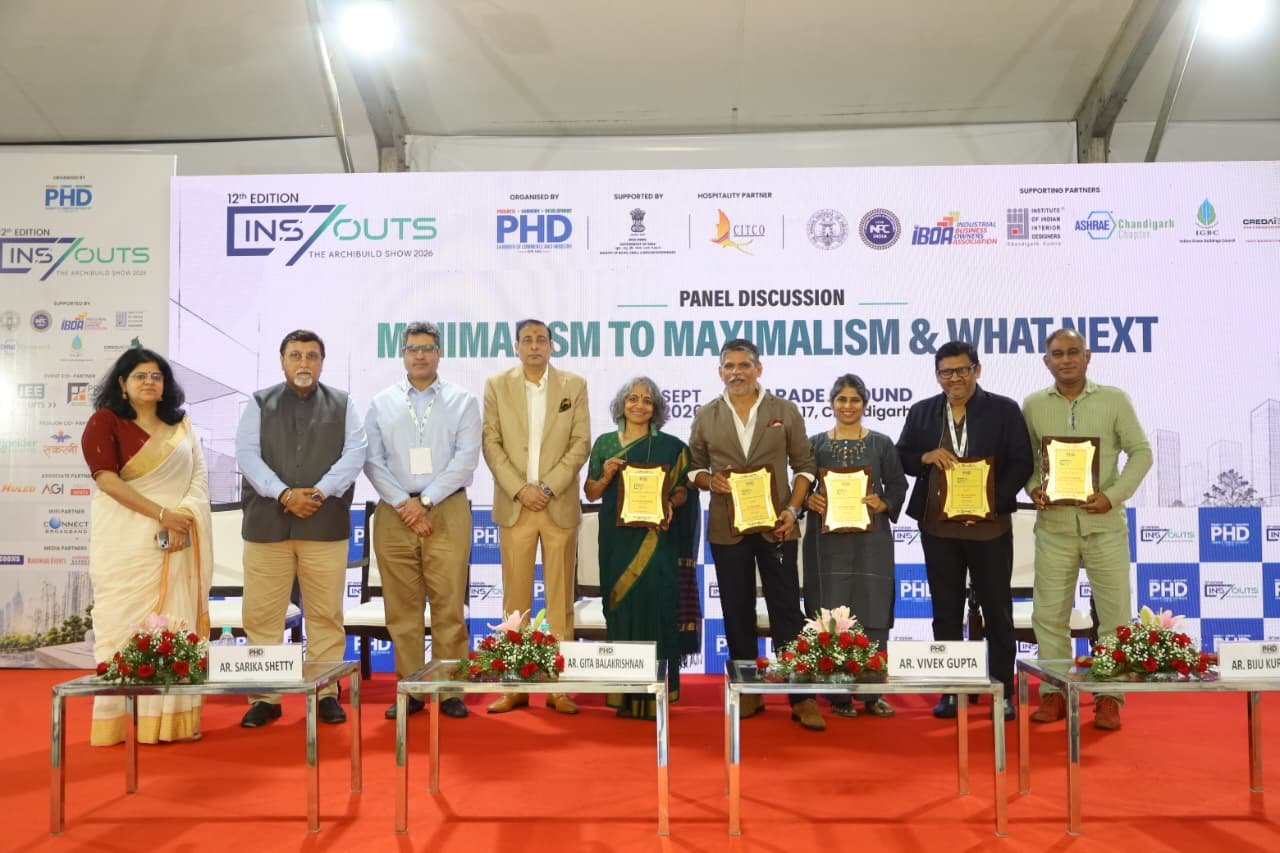
The main session was moderated by Ar. Vivek Gupta, Principal Architect, Arvind Vivek and Associates, New Delhi. The panel comprised Ar. Biju Kuriakose, Architecture RED, Chennai, and Ar. Sarika Shetty, Partner, SJK Architects, Mumbai.
The panellists deliberated on the transition from minimalist design approaches towards maximalism and discussed what could emerge as the next phase in architecture and interior design. They explored ways of combining creativity, functionality and sustainability while responding to rapidly changing social and technological needs.
The second session focused on “Parametric Architecture”, highlighting the growing influence of computational tools and digital technologies in contemporary architectural practice.
Ar. Manmohan Khanna, Organising Core Committee Member, INS & OUTS 2026, also participated in the session and contributed to the discussion.
A detailed presentation on Parametric Architecture was delivered by Ar. Krishna Murthy, Principal Architect, Folds Design Studio, who elaborated on the increasing role of computational design, digital fabrication, and emerging technologies in shaping the future of architecture.
During the presentation, he emphasised the need for architects and architecture students to become familiar with digital tools and evolving methods of design and fabrication. He also highlighted the potential of AI, CNC and robotic technologies in improving efficiency and addressing challenges such as labour shortages in the construction sector.
The session also stressed the importance of maintaining a balance between traditional craftsmanship and technological advancement, while equipping architecture students with greater practical exposure to contemporary digital practices.
The panelists and speakers were felicitated by the PHDCCI leadership in recognition of their participation and contribution to the conference.
The vote of thanks was proposed by Mr Suvrat Khanna, Co-Chair, Chandigarh, PHDCCI,who expressed gratitude to the participating architects, experts and delegates for contributing to the inaugural conference and sharing their insights on the future of architecture and design.
PHDCCI INS & OUTS Explores Architecture from Minimalism to MaximalismLeading architects, designers and professionals from across the country deliberate on emerging trends and challenges in architecture


- Advertisment -